As the world embraces rapid technological change, the fashion industry is undergoing a dramatic transformation—much of it powered by artificial intelligence (AI). From the earliest stages of creative design to the intricate logistics of manufacturing, AI is reshaping how clothes are imagined, produced, and delivered. But what does this mean for designers, manufacturers, and consumers? Let’s dive into the compelling ways AI is revolutionizing design and manufacturing in fashion, with concrete examples, real-world statistics, and a balanced look at the opportunities and challenges ahead.
AI-Driven Trend Forecasting: Predicting What’s Next
One of the most game-changing applications of artificial intelligence in fashion is trend forecasting. Traditionally, predicting fashion trends required a blend of intuition, experience, and manual market analysis. Today, AI platforms scan billions of data points from social media, e-commerce platforms, fashion shows, and even street style photographs.
For example, companies like Heuritech use deep learning algorithms to analyze over 3 million images daily from Instagram, detecting emerging trends up to 12 months in advance. According to a 2022 McKinsey report, AI-driven forecasting can improve forecasting accuracy by up to 50% compared to manual methods. This not only helps brands stay ahead of the curve but also reduces the risk of overproduction—a key concern in an industry where, according to the Ellen MacArthur Foundation, an estimated $210 billion worth of clothing is unsold each year.
Brands like Tommy Hilfiger and Adidas have already integrated AI-based forecasting to inform their seasonal collections, resulting in quicker response times to evolving consumer preferences and significantly reduced waste.
Automating the Design Process: Creativity Meets Algorithms
AI isn’t just helping brands understand what people want—it’s also changing how garments are designed. By leveraging generative algorithms, designers can quickly generate thousands of variations on a theme, experimenting with color palettes, silhouettes, and patterns at unprecedented speed.
One notable tool is Google’s “Project Muze,” which uses neural networks trained on fashion trends and user preferences to create unique clothing designs. Designers can input parameters such as mood, color, or fabric, and the system suggests innovative concepts. In 2023, luxury brand Balenciaga collaborated with AI designers to develop bold new patterns, which contributed to a 20% increase in engagement on their digital platforms.
AI also supports the rise of mass customization. Brands like Nike and Levi’s offer AI-driven personalization platforms where customers can co-create products, selecting materials, colors, and even fit, all facilitated by intelligent recommendation engines.
Optimizing Manufacturing: Smart Factories and Robotics
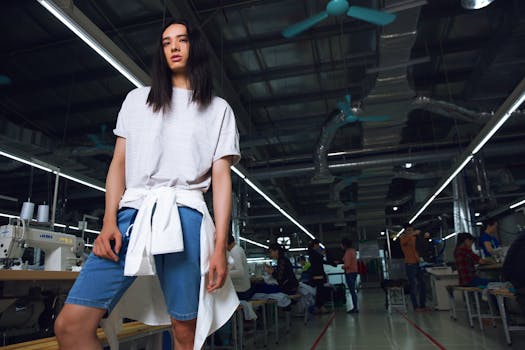
Manufacturing is where the impact of AI is most tangible, with “smart factories” leading the charge. These advanced facilities use AI-powered robotics, computer vision, and predictive analytics to streamline production and minimize errors.
A 2023 survey by the World Economic Forum found that factories implementing AI-driven automation saw a 30% reduction in production costs and a 45% increase in output quality. In Bangladesh, the world’s second-largest apparel exporter, factories using AI-based quality inspection systems reduced garment defects by up to 70%.
Key applications include:
- Automated cutting machines that optimize fabric use, reducing waste by as much as 15%. - AI-powered sewing robots that can adjust stitching patterns in real time to accommodate fabric variations. - Predictive maintenance systems that minimize machine downtime, ensuring smoother production flows.The table below compares traditional and AI-powered manufacturing processes in key performance areas:
| Aspect | Traditional Manufacturing | AI-Powered Manufacturing |
|---|---|---|
| Production Speed | Moderate (manual/semi-automatic) | High (fully automated, continuous) |
| Quality Control | Random sampling, manual inspection | Automated, real-time defect detection |
| Waste Reduction | Limited, often above 20% | Optimized, often below 10% |
| Customization | Batch-based, limited options | On-demand, high personalization |
| Labour Dependency | High | Reduced (focus on skilled oversight) |
Reducing Environmental Impact through AI
Sustainability is one of fashion’s most pressing challenges, and AI offers several solutions to reduce environmental impact. The fashion industry is responsible for about 10% of global carbon emissions and produces over 92 million tons of textile waste annually, according to the United Nations Environment Programme.
AI helps tackle this in multiple ways:
- $1 By improving the accuracy of demand predictions, AI helps brands produce only what will sell, dramatically cutting down on unsold inventory and waste. - $1 AI-powered systems maximize fabric utilization, with some companies reporting up to 12% less fabric waste per garment. - $1 Machine learning tools can analyze and suggest eco-friendly alternatives based on performance and cost criteria. - $1 AI manages factory energy consumption, identifying opportunities for savings and reducing carbon footprints.For instance, Swedish brand H&M uses AI to track and analyze product sales, optimizing inventory and reducing waste. As a result, H&M reported a 21% year-on-year decrease in unsold stock in 2022.
Challenges and Ethical Considerations of AI in Fashion
While the benefits of AI in fashion are clear, the rise of these technologies isn’t without challenges. One significant concern is the potential displacement of workers. The International Labour Organization estimates that up to 57 million jobs in the garment sector could be affected by automation in Asia alone over the next decade.
There are also ethical concerns surrounding data privacy, algorithmic bias, and the homogenization of design. AI systems trained on existing trends may reinforce dominant aesthetics, potentially stifling creativity and diversity.
Furthermore, the adoption of AI requires significant investment in technology and training, which can leave smaller brands and developing economies at a disadvantage. According to a 2023 Statista survey, only 27% of small and medium-sized fashion enterprises reported having access to advanced AI tools, compared to 72% of large brands.
Addressing these challenges calls for a balanced approach—one that combines technological innovation with policies that support upskilling, ethical sourcing, and creative diversity.
The Human-AI Collaboration: Redefining Roles in Fashion
Despite concerns about job losses, AI is also creating new opportunities for human creativity and technical expertise. Rather than replacing designers, AI acts as a collaborative partner, freeing up time for ideation and experimentation. In manufacturing, skilled workers are increasingly needed to oversee, program, and maintain intelligent systems.
Educational institutions are responding by introducing hybrid courses in fashion and technology. The London College of Fashion, for example, now offers programs in “Fashion Futures,” blending design with AI and data science.
Furthermore, a 2023 Deloitte report found that fashion companies combining human creativity with AI tools reported a 33% higher rate of product innovation and a 22% increase in customer satisfaction compared to those relying solely on traditional methods.
Looking Ahead: The Future of AI in Fashion Design and Manufacturing
As artificial intelligence continues to evolve, its influence on the fashion industry will only deepen. The next frontier includes fully automated, on-demand manufacturing and even AI-generated virtual fashion for digital worlds like the metaverse.
According to forecasts by GlobalData, the AI market in fashion is set to grow from $270 million in 2021 to over $4.4 billion by 2027. This explosive growth will likely spur even greater innovation, sustainability, and personalization.
Yet, the human element remains vital. Fashion is, at its core, an expression of culture, identity, and artistry. AI will be most powerful when it amplifies human creativity rather than replacing it—ensuring that the industry’s future is not just efficient and sustainable, but also bold, diverse, and inspiring.